

CRIS Cancer Foundation Contributes to a Promising Advance in Head and Neck Cancer
CRIS Cancer Foundation has helped make possible encouraging results from the international OrigAMI-4 clinical trial, which explored a new treatment option for patients with recurrent or metastatic head and neck cancer whose disease had progressed after standard treatment.
The trial tested amivantamab, a bispecific antibody designed to target two key proteins involved in tumour growth, EGFR and MET, blocking both signalling pathways while helping the immune system attack cancer cells more effectively. The results, recently published in the Journal of Clinical Oncology, showed that tumours shrank in 42% of patients, while 15% achieved a complete response, with no detectable disease on imaging scans. More than half of patients (54%) were still alive one year after starting treatment.
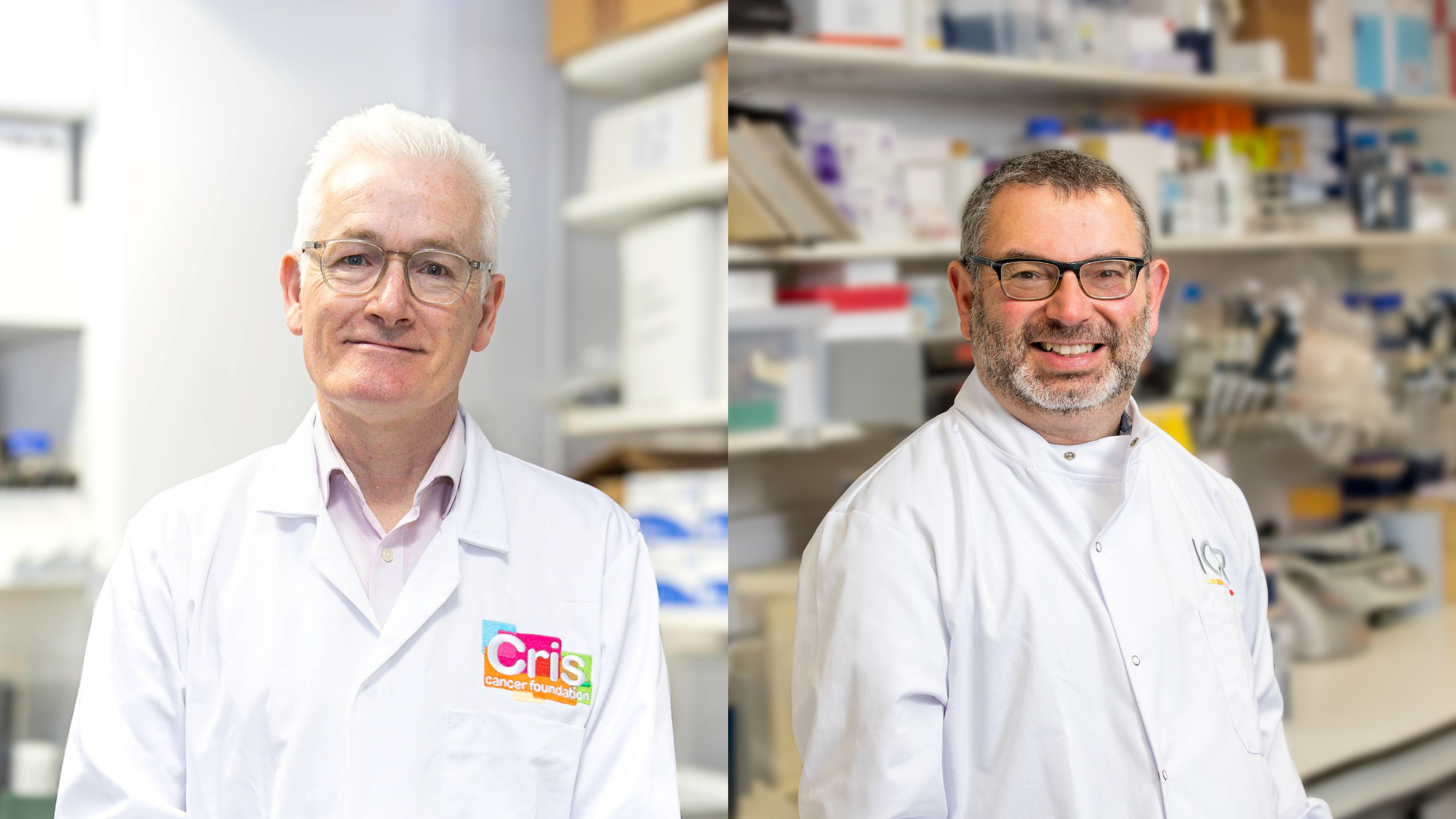
The international study took place across 56 centres in 11 countries and was led by Professor Kevin Harrington (left), Director of Radiotherapy and Imaging at The Institute of Cancer Research (ICR) and a member of the CRIS Cancer Foundation International Scientific Committee.
Head and neck cancer is the seventh most common cancer in the UK, with around 13,800 people diagnosed each year. Once the disease returns or spreads beyond its original site, treatment options become extremely limited, making advances like this particularly significant for patients who currently have very few alternatives.
CRIS Cancer Foundation has supported this research through its long-term investment in the Centre for Immunotherapy of Cancer (CIC), led by Professor Alan Melcher (right) at the ICR. This investment has enabled the collection, analysis of high-quality biological samples, providing the translational research capabilities behind the study's findings.
The OrigAMI-4 trial reflects the impact of sustained investment in world-class research environments, helping create the conditions that allow innovative clinical trials to move forward and bring new treatment options within reach for patients.