
CRIS Cancer Foundation Awards Its First ICR Fellowship
CRIS Cancer Foundation is proud to announce its first fellowship in partnership with the Institute of Cancer Research (ICR), awarded to Dr Penelope Edwards to investigate why colorectal cancer is increasingly affecting people under the age of 50.
The fellowship will fund research into the role of the gut microbiome in early colorectal cancer development, focusing on bacteria that produce a toxin called colibactin. This toxin can gradually damage the DNA of cells lining the colon, leaving behind molecular "scars" that may be detectable in healthy tissue years before cancer develops. Using colon tissue samples spanning childhood to adulthood, Dr Edwards will trace how this damage accumulates over time and examine whether external factors such as antibiotics and pesticides may accelerate the process.
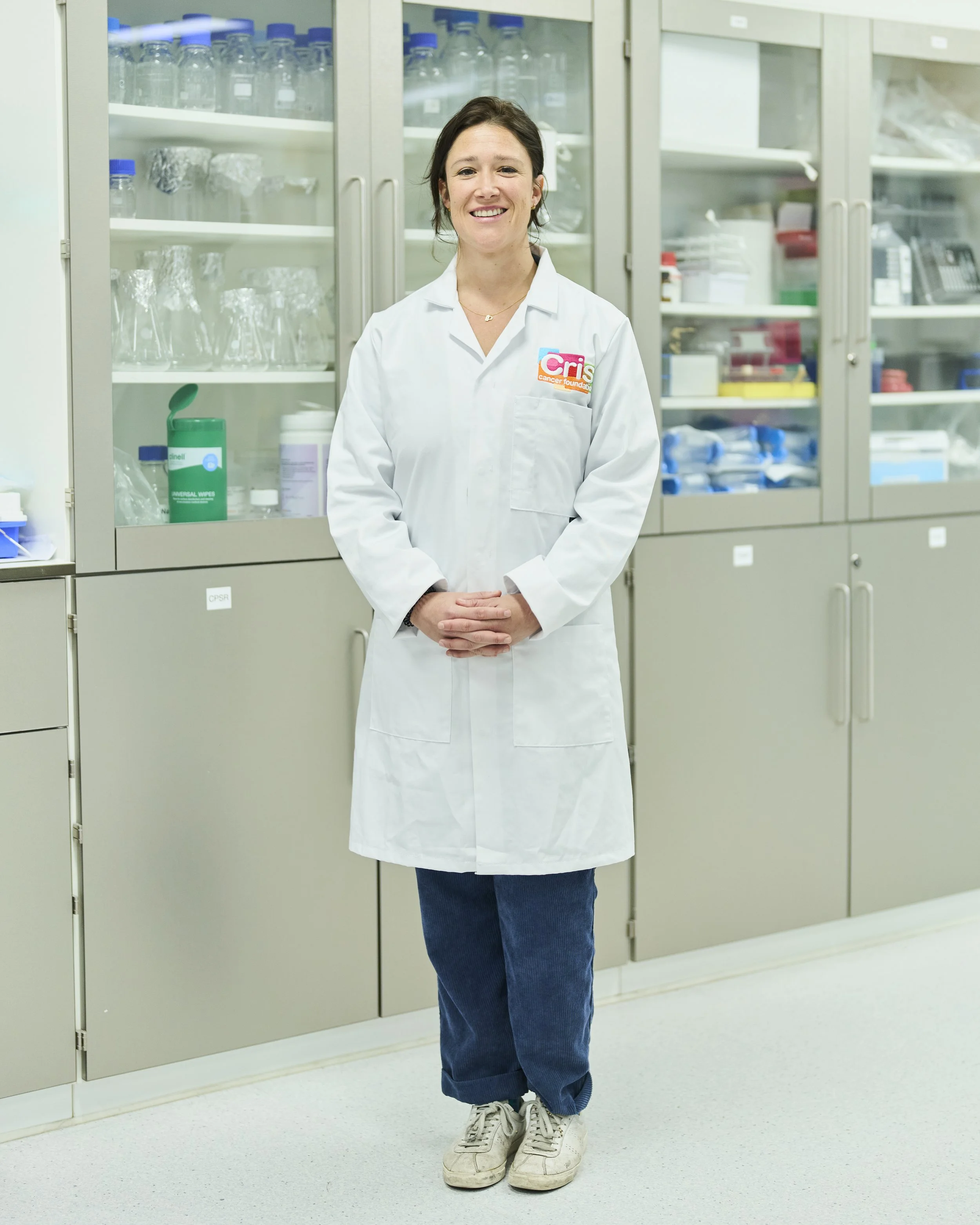
"I really want to dedicate my time and research to understanding why the rates of bowel cancer are increasing in young people. And this fellowship will allow me to do that and hopefully then reduce the rates of these cancers in young people," said Dr Penelope Edwards, Principal Investigator on the project at the ICR.
Colorectal cancer was once considered primarily a disease of older age but is now rising sharply in people under 50, with cases affecting men and women at almost equal rates, marking a shift from historical patterns. A key aim of this project is to develop simple non-invasive blood or stool tests capable of detecting these early warning signs before cancer occurs, transforming currently invisible biology into practical tools for prevention and early diagnosis.
The fellowship is cofunded by CRIS Cancer Foundation and the ICR over three years, marking the start of an annual commitment to fund a new ICR Emerging Clinical Academics fellowship and reflecting the joint effort to invest in early-career researchers.